True & False about second-hand clothing

Updated: Feb 4
In the debate around second-hand clothing and the circular textile economy, many myths and half-truths persist. This article aims to separate fact from fiction — exploring what really happens with donated clothes, how much is recycled, the impact of overproduction, policy changes, and the global imbalances in the used-clothing market. So here is True and false about second-hand clothing
1. Do the clothes I donate really help?

True. Donation is not the end of the line — second-hand is part of a well-developed global system. Your donated garments are sorted, graded, and either sold locally or exported. The proceeds from reselling these clothes fund collection, sorting, and transportation, ensuring that many of these garments get reused rather than discarded prematurely.
Also a significant part of the second-hand industry has long been run by charitable organisations, which means that the clothes you donate not only find new use around the world, but also that much of the revenue they generate goes to aid work.
2. “Nearly half of donated clothes end up as waste” — Myth or fact?

False. The common claim that 40% or more of donated clothing becomes waste lacks credible evidence.
There are no robust, peer-reviewed studies supporting this figure. In fact, many in the industry have pushed back against this narrative, seeing it as harmful to the legitimacy of reuse as a climate-positive strategy.
Reuse News has covered this topic in many articles. You can read them here
3. Oversupply of new clothes: the root problem

True. One of the biggest challenges is not just what happens after clothes are used, but how many new garments are produced. European production and import volumes are massive: according to the European Environment Agency, the EU consumes an average of 19 kg of textiles per person per year. eea.europa.eu This overproduction fuels waste: clothing consumption is high, but reuse and recycling capacities are not keeping up. Zero Waste Europe
Moreover, some garments never even reach consumers — studies estimate between 4–9 % of clothes sold in Europe are destroyed before use. circulareconomy.europa.eu
The scale of overconsumption, especially fast fashion, is a fundamental barrier to creating a truly circular textile system. Zero Waste Europe
4. How much of clothing is actually recycled?
Unfortunately, very little. Only a very small share of used textiles is recycled back into new clothes. According to EU data, about 1 % of used textiles end up being recycled into new garments. European Commission
Recycling is technically and economically difficult: many clothes are made from mixed fibres, have complex constructions, or contain elastane, trims, etc.
As a result, most recycled textiles in Europe are downcycled into lower-value products like insulation or industrial rags, rather than being made into new fashion items.
5. Why new sorting legislation in Europe?

Policy ambitions — and unintended side effects.The EU is rolling out stricter rules for how textiles should be collected and sorted to promote circularity. European Commission
However, these well-meaning regulatory changes have increased costs for organizations that collect used clothes. This has made it harder for many non-profits to sustain their operations, as they must comply with more rigorous sorting requirements. eea.europa.eu
In some cases, these regulations might even discourage reuse, because meeting the new standards is expensive — threatening the second-hand infrastructure that depends on sorting and redistribution.
6. Glut of second-hand clothes in Europe
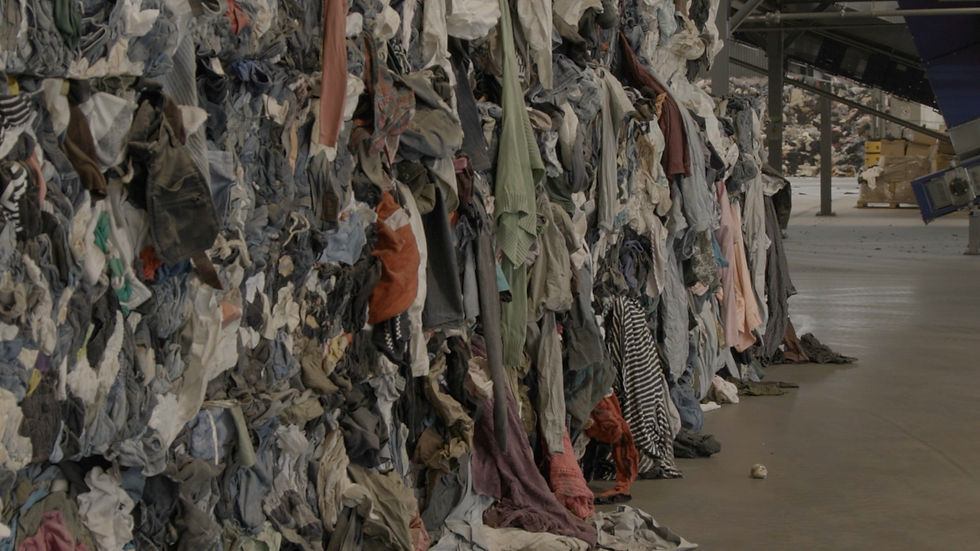
Yes, there is an oversupply. Currently, Europe is experiencing a surplus of used clothing. This is driven by several factors: key export markets (such as Russia and Ukraine) have contracted significantly, and new EU sorting rules have increased the volume of clothes delivered to collection centers — including lower-quality items.The surplus has depressed resale prices, making it economically difficult for second-hand traders to operate. Many collection organizations are forced to pre-sort more aggressively before selling onward, raising their costs and undermining their business models.
7. Classification of second-hand clothing as waste

A controversial policy debate.There is an ongoing process — notably within UNEP and under the Basel Convention — about whether used clothing should legally be classified as “waste.”
If second-hand garments are officially labeled as waste, it could trigger stricter export controls, more bureaucracy, and higher costs for trade.
Many in the reuse sector oppose this shift, arguing that it would hamper circularity by making reuse operations less viable and slowing down cross-border trade in second-hand clothes.
True and False about second-hand clothing - Why all of this matters
The textile sector’s circular transformation is more complicated than many believe. Second-hand clothes often do have a second life, and donations support a broad, global system — but persistent myths about waste risk undermining that system’s credibility.
Meanwhile, recycling remains underdeveloped, and policy changes, though well-intended, can harm reuse infrastructure. Most critically, the underlying problem is overproduction — we are simply making too many new garments, many of which never get fully utilized.If we want a truly circular textile economy, we need honest discussions, smarter regulation, and a realignment of incentives — toward reuse, better design, and lower material throughput.
Written by
Thomas Lundkvist


Comments