EU ban on destroying unsold clothing raises new question: where will the garments go?

Europe is preparing to ban the destruction of unsold clothing. The move is widely welcomed as a step towards a more circular textile economy. Few people argue that usable garments should be burned or discarded.
But the decision arrives at a complicated moment for Europe’s textile system. In many parts of the continent, the infrastructure designed to handle used clothing is already under growing pressure.
The question now facing policymakers is straightforward, even if the answer is not: what happens to unsold garments when destruction is no longer an option?
Ecodesign regulation introduces new rules for unsold clothing
Under the EU’s Ecodesign for Sustainable Products Regulation, companies will soon be required to disclose how they handle unsold clothing and footwear. Large companies will also be prohibited from destroying unsold products, with the aim of reducing waste and encouraging reuse or recycling.
The logic behind the measure is simple. If companies cannot dispose of excess stock through destruction, they will have a stronger incentive to manage it differently, through resale, donation or recycling.
In theory, fewer clothes will be wasted.
In practice, however, the question is where these garments will go.
Europe’s textile collection and sorting systems are already under strain
Across Europe, the systems that collect and sort used clothing are experiencing significant changes.
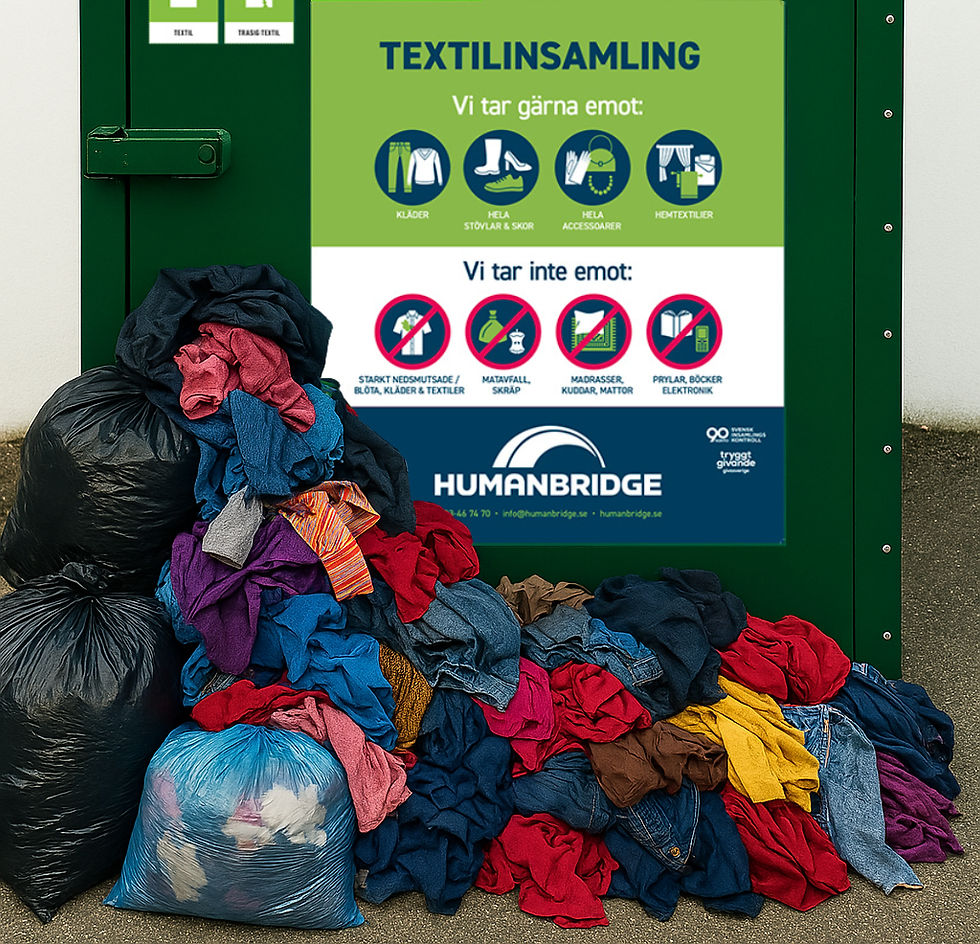
New rules require households to separate textile waste instead of discarding it in general waste streams. As a result, large volumes of textiles are now entering collection systems that were originally designed primarily for reusable garments.
At the same time, the market conditions for second-hand clothing have become more difficult. Several traditional export markets have weakened in recent years, while competition between sorting operators has intensified and resale prices for used garments have declined.
The result is a system where volumes are rising while margins are shrinking.
Sorting companies and charitable collectors in several countries have reported growing costs and increasing pressure on storage and sorting capacity.
Textile recycling capacity remains limited
In the longer term, policymakers expect textile recycling to play a much larger role in absorbing Europe’s clothing surplus. Significant investments are being directed toward new textile-to-textile recycling technologies.
But industrial-scale recycling for mixed post-consumer textiles remains limited.
Most clothing collected in Europe today can only be recycled through processes that produce lower-value outputs such as insulation or industrial materials. Fully circular fibre-to-fibre recycling is still emerging and currently handles only small volumes.
This means that reuse markets continue to play a crucial role in extending the lifespan of garments that remain wearable.
EU ban on destroying unsold clothing does not address production volumes
The ban on destroying unsold clothing addresses one part of the textile waste problem: the treatment of excess inventory. But it does not change another fundamental dynamic of the global fashion system: the scale at which new garments are produced.
Clothing production has grown rapidly over the past two decades, and large volumes of garments continue to enter the market each year. When those garments remain unsold, they add to the growing pool of surplus clothing that must be redistributed, reused or recycled.
If fewer garments are destroyed and recycling capacity remains limited, more of that surplus will need to be absorbed elsewhere in the system.
A new capacity challenge for European textile policy
Europe’s textile policies are entering a new phase. Governments are introducing rules to collect more textiles, monitor clothing flows more closely and prevent the destruction of usable products.
These measures are intended to reduce waste and encourage more circular use of materials.
But they also raise a practical question about system capacity.
If more clothes are collected, fewer are destroyed and recycling systems are still developing, the pressure on the rest of the textile system inevitably grows.
For now, the answer to where those clothes will go remains uncertain.
What is clear is that Europe’s textile system will have to find new ways to handle the growing surplus.

Comments