Pressure in Europe’s textile system is becoming visible— now the EU is starting to adjust its rules

Updated: Mar 23
Across Europe, pressure in the textile system is no longer abstract. It is becoming visible.
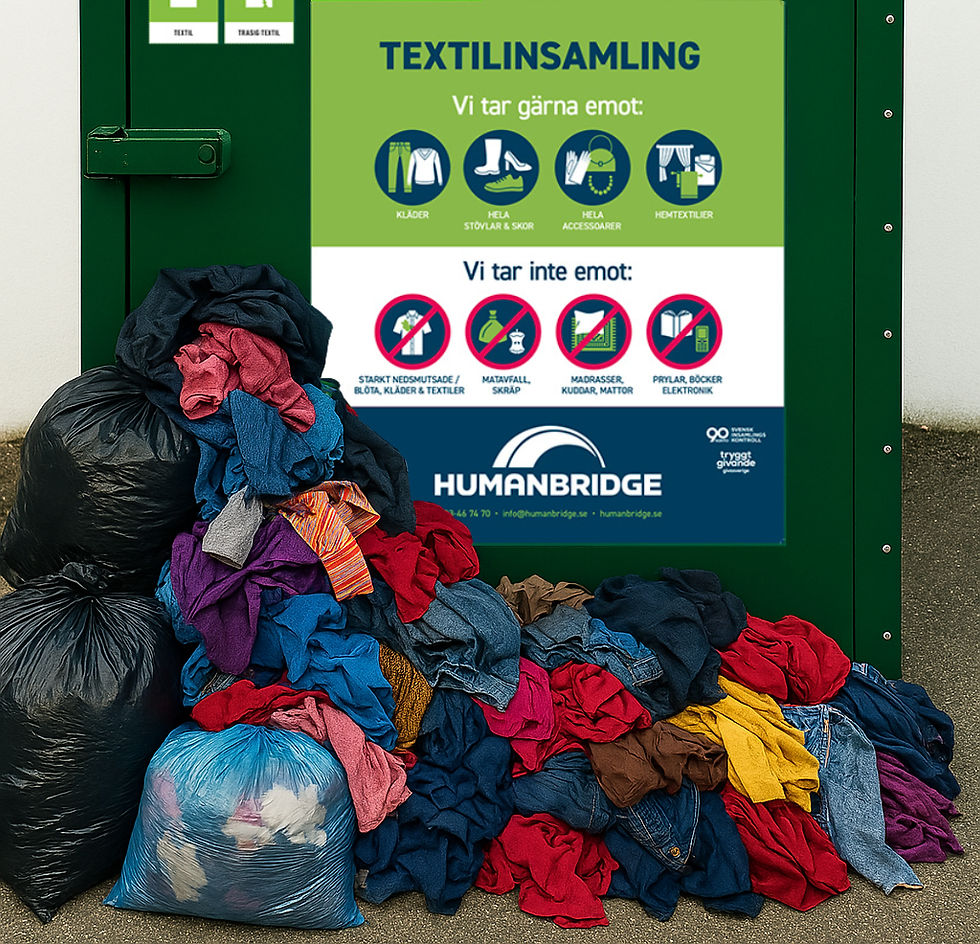
Collection volumes are rising, export markets are shifting, and parts of the system designed to handle used textiles are struggling to keep pace.
Now, the European Commission is beginning to adjust existing rules — not to introduce new ambitions, but to make the current system work in practice.
Across Europe, signs of strain are emerging across the textile system.
Operators handling used clothing report rising volumes, weaker margins and growing operational complexity. Policies designed to reduce waste and increase circularity are now interacting with a system that is already under pressure.
In response, policymakers are beginning to shift focus — from setting new targets to making existing rules operational.
Last week, the European Commission opened a consultation on its proposed “Environmental Omnibus”, a package aimed at simplifying parts of EU environmental legislation, including rules affecting textiles and circular systems.
On paper, the initiative is about reducing administrative burden. In practice, it signals a growing need to make existing rules operational. The system is becoming harder to operate.
What the Environmental Omnibus means for EU textile policy
Over the past few years, EU textile policy has expanded rapidly. New requirements on textile collection, tighter controls on exports of used textiles, and upcoming rules on unsold garments are all designed to build a circular system.
But as Reuse News recently reported, these changes are also putting pressure on the system that handles used textiles. Volumes are rising. Quality is declining. Costs are increasing.
The Environmental Omnibus suggests a shift in focus. The emphasis is no longer only on adding new rules, but on adjusting how existing rules function in practice.
What is the Environmental Omnibus?
An “omnibus” is a legislative update that modifies several existing legal acts at once.
In this case, the European Commission is reviewing parts of its environmental regulatory framework to:
simplify reporting requirementsreduce overlapping obligationsimprove compliance across EU member states
The consultation signals that the regulatory framework for circular textiles is still being developed and adjusted.

Growing pressure on textile collection and sorting systems
The push for simplification comes as both material and regulatory pressure increase at the same time.
More textiles are entering collection and sorting systems, while rules governing how they are handled are becoming more complex.
The result is a growing gap between policy ambition and operational reality in the EU textile system.
The Commission is not changing direction. But it is beginning to adjust how the system works.
A new phase in EU textile policy implementation
EU textile policy is entering a new phase.
If the past years were about building regulatory frameworks for circular textiles, this phase is about making those systems function in practice.
This is often where structural constraints and unintended effects become visible.

Comments