Circulose restarts commercial textile-to-textile recycling plant in Sweden

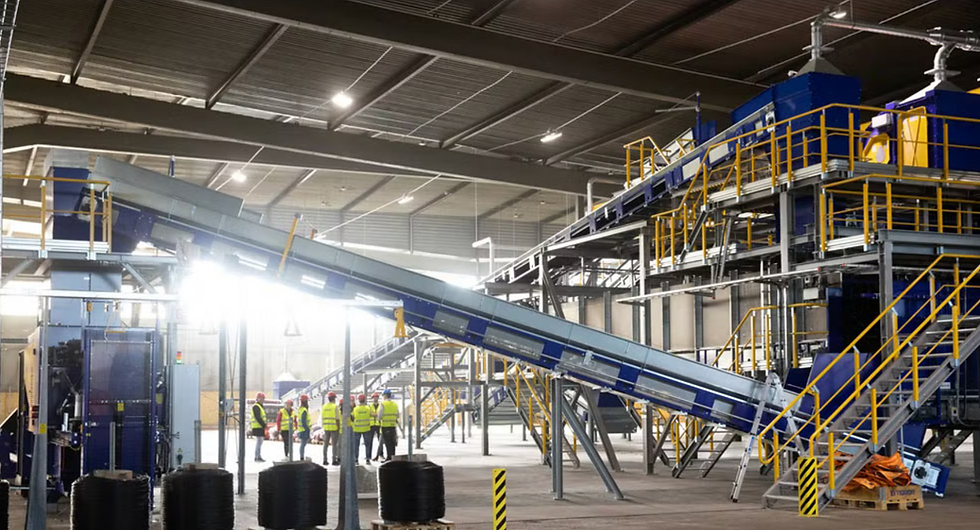
The Swedish company Circulose has announced it will restart commercial-scale production at its facility in Sweden later this year, marking a rare development for industrial textile-to-textile recycling in Europe. The plant, previously operated by Renewcell before its insolvency in 2024, was the world’s first commercial chemical textile recycling facility for cotton-based textiles and has now been revived under new ownership and a revised strategy.
The restart comes at a time when the global textile recycling sector is struggling to move beyond small-scale pilots and demonstration projects toward stable industrial volumes. Across Europe and beyond, new ventures are emerging, but complex value chains, uneven collection systems and supply constraints have kept truly commercial textile-to-textile recycling rare.
Recent initiatives in the United States, France and Spain have focused on building textile regeneration hubs that integrate sorting and pre-processing with recycling, but most remain in early implementation phases. Industry observers have pointed to logistics, access to consistent and quality-controlled feedstock, and regulatory uncertainty as key barriers to scaling fiber-to-fiber recycling.

Demand-linked production model for recycled dissolving pulp
Circulose’s announcement underscores both the potential and the fragility of industrial textile-to-textile recycling. The company said preparations are underway for production to resume in the fourth quarter of 2026, with new CIRCULOSE pulp expected before year-end. The material is a dissolving pulp made from discarded cotton textiles and is designed to be processed into regenerated cellulosic fibres such as viscose, lyocell and modal.
Chief executive Jonatan Janmark said the company has aligned its production plans with confirmed demand and secured commitments from eleven partner brands before restarting operations. He described the restart as a milestone for scaling next-generation materials and said the ambition is to integrate recycled dissolving pulp into existing fibre supply chains. Strategic agreements have also been signed with fibre producers, including Tangshan Sanyou, Aditya Birla Group and Jilin Chemical Fiber, aimed at anchoring commercial volumes within established viscose and cellulosic fibre production.
Until new production is fully operational, orders are being supplied from existing inventory produced prior to Renewcell’s bankruptcy. Circulose was acquired by private equity firm Altor in 2024, and the company’s revised approach signals a shift toward demand-linked production rather than speculative capacity expansion in advance of secured offtake.
Industrial textile-to-textile recycling in a shifting EU policy context
The revival carries symbolic weight in a European context where several high-profile textile recycling ventures have struggled to secure long-term profitability at industrial scale. At the same time, EU policymakers are advancing rules under the EU Strategy for Sustainable and Circular Textiles intended to increase recycled content, strengthen separate textile collection and restrict the destruction of unsold textiles. These measures are expected to influence future demand for recycled fibres and secondary raw materials.
Yet upstream challenges remain significant. Large-scale textile-to-textile recycling depends on reliable access to sorted, traceable and quality-controlled textile feedstock, an area where collection, sorting and pre-processing infrastructure across Europe is still uneven and in transition.
For now, Circulose stands as one of the few examples of a commercial-scale textile-to-textile recycling facility in Europe returning to operation after insolvency. Whether this restart marks a turning point for fiber-to-fiber recycling will depend less on technology alone and more on how effectively supply chains, collection systems, regulatory frameworks and market incentives align in the years ahead.

Comments