Operation Demeter XI: what did customs actually find in textile waste enforcement?

Operation Demeter XI marked a shift. For the first time, textiles were treated as a priority waste stream in the World Customs Organization’s global enforcement effort against illegal waste trafficking.
The result: 1,176 tonnes of textile waste were reportedly intercepted or returned across 25 operations. But when customs went looking for textile waste, what did they actually find?
Customs authorities themselves have flagged a core challenge: many jurisdictions lack clear criteria for distinguishing between used textiles and textile waste. According to the World Customs Organization’s reporting on Operation Demeter XI, participating customs administrations noted “significant regulatory gaps, particularly the absence of clear national criteria distinguishing used textiles from textile waste.”
On paper, the message seems clear. Textile waste exports are presented as a growing compliance problem. Enforcement is tightening. Authorities are responding. But the first textile-focused results raise a more complicated question.
What exactly counts as textile waste under current customs and waste law frameworks?
Textile waste classification under the Harmonized System
Operation Demeter was designed to combat illegal trafficking in hazardous and regulated waste streams. In previous editions, the focus has been on plastics, e-waste and other materials where the economic logic is straightforward: treatment is costly, compliance is strict, and the incentive to externalise disposal costs can be strong.
But textiles are different.
Used clothing is not automatically a negative-value waste stream. It is also a global commodity, traded in established markets, sorted by grade, priced by quality and resold across continents. Millions of tonnes move annually through commercial channels that depend on resale value rather than disposal.
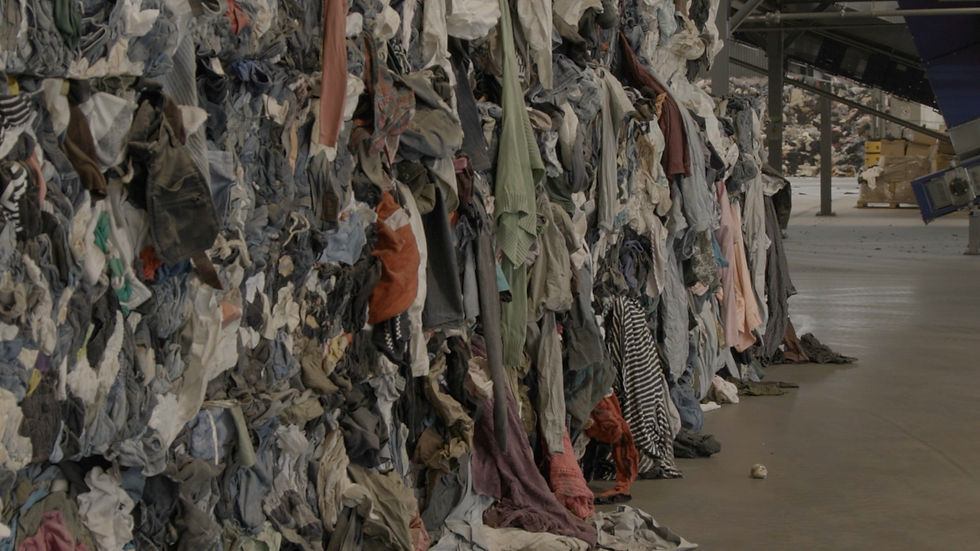
When such a market is examined through a waste enforcement lens, classification becomes central.
Under the Harmonized System, used clothing intended for reuse falls under HS 6309. Textile waste and rags fall under HS 6310. In practice, however, the boundary between the two is not always self-evident. It depends on declared intended use, degree of sorting, quality thresholds and, crucially, market context.
A garment deemed unsellable in a European sorting facility may still carry value in a different market segment elsewhere. In many importing countries, lower grade clothing is not automatically waste. It is cheaper clothing within an established secondary market.
Waste law, by contrast, operates on a binary basis. A shipment must be declared either as goods for reuse or as waste subject to stricter controls under waste shipment rules.
What the Demeter XI figures show – and do not show
The 1,176 tonnes reported under Operation Demeter XI sound significant. Yet in the context of the European Union’s annual textile exports, which run into the millions of tonnes, the volume represents a small fraction of overall flows.
A targeted enforcement operation will by design identify irregularities. What remains unclear from the publicly available information is how many of the intercepted shipments involved deliberate illegal waste trafficking, and how many reflect disputes over customs classification, documentation, contamination levels or quality thresholds.
The operation demonstrates that authorities are scrutinising cross-border textile flows more closely under waste shipment control regimes. It does not, at this stage, quantify the scale or nature of systemic illegal textile waste exports.
Waste shipment enforcement meets the global second-hand textile trade
The tension may lie less in criminal intent and more in regulatory design.
Hazardous waste enforcement frameworks assume a relatively clear boundary between valuable goods and unwanted material. The global second-hand textile trade does not operate along such a clean line. It is a graded market, shaped by income levels, repair cultures and price sensitivity. What one market rejects, another may absorb at a lower price point within a functioning resale system.
When customs officers are asked to draw a binary line within that spectrum for the purposes of waste shipment enforcement, ambiguity is almost inevitable.
Operation Demeter XI may therefore reveal not only instances of irregular shipments, but also the structural difficulty of applying waste law and customs codes to a functioning global resale market.
The question now is not simply whether textile waste is being illegally exported. It is whether current waste shipment enforcement tools and textile waste classification rules are capable of distinguishing waste from value in a trade flow that does not fit neatly into either category.


Comments