Clothing containers disappear as Europe's textile collection crisis deepens

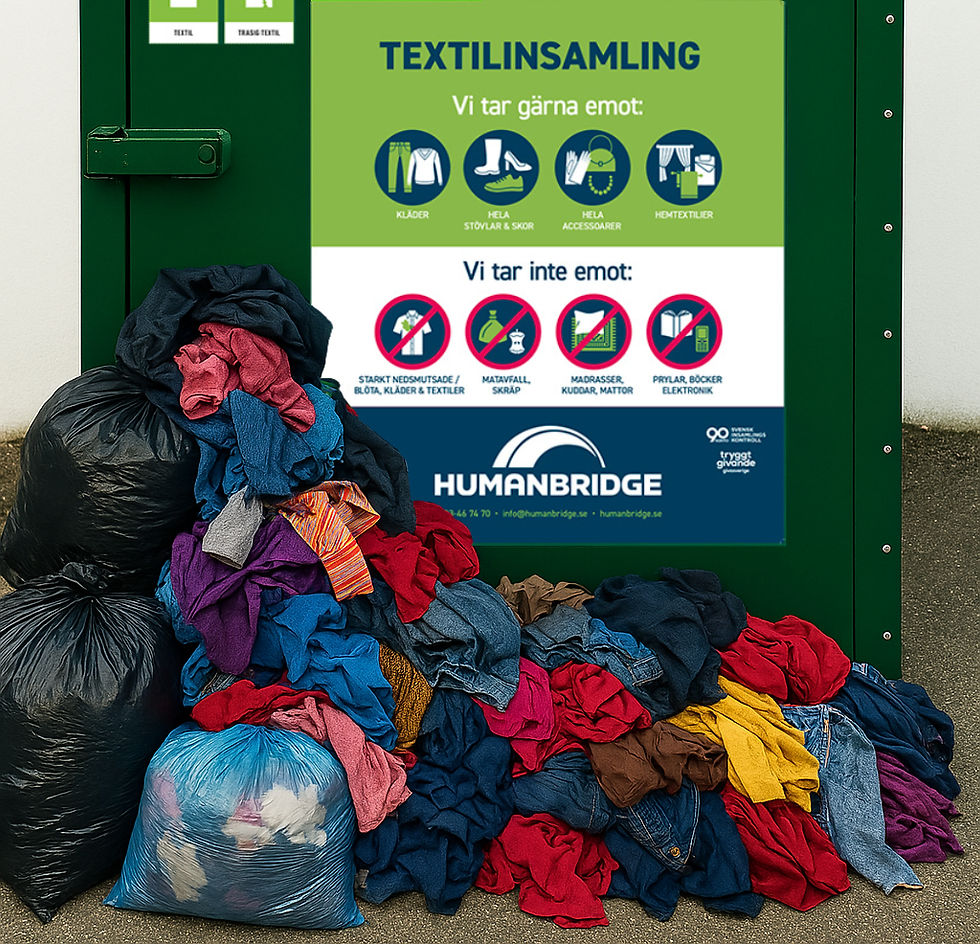
Collection points are disappearing, clothing bins are overflowing and municipalities are struggling with illegal dumping. Across parts of Europe, the financial crisis in the used-textile sector is now producing visible consequences for local communities.
In Germany, the municipality of Kodersdorf announced on 30 October that its clothing collection containers would be removed by the end of the year. The municipality cited the crisis in the textile recycling sector, problems with regular emptying and increasing amounts of waste.
Elsewhere in Germany, the regional waste organisation RegioEntsorgung has described how insolvencies among established collectors have led to withdrawn collection services. Charitable organisations have also removed containers, leaving remaining collection points under growing pressure.
Overflowing bins and illegally dumped textiles have become a problem for municipalities and residents.
From financial pressure to disappearing services
Similar problems have emerged in Belgium. In August, the municipality of Essen decided to remove textile containers from streets and public squares by October.
The municipality cited persistent illegal dumping around collection points and declining textile quality. Residents can still use other collection services, but the decision illustrates how established collection arrangements are being reconsidered.
These developments give concrete form to concerns that have surrounded Europe's used-textile sector for more than a year. Falling revenues, deteriorating textile quality and rising operating costs have put collection and sorting businesses under pressure. What was previously described largely as a financial crisis is now affecting the availability and organisation of collection services.
The financial gap behind the crisis
New figures from the Netherlands illustrate the underlying economic problem. A cost study published by Stichting UPV Textiel in June found that collection and pre-sorting operations face projected net shortfalls of €0.07–0.12 per kilogram in 2026. For sorting operations, the estimated shortfall is €0.07–0.14 per kilogram.
The projections suggest that revenue from used textiles is insufficient to cover operating costs in parts of the system. They are estimates, not audited losses for the whole European sector.
In France, the authorities have acted over another weakness. On 28 October, the government announced that producer responsibility organisation Refashion had been formally reminded of its obligations to ensure the collection of textile waste from social economy organisations. The intervention followed an earlier administrative penalty and highlights the dispute over who is responsible when charitable and reuse organisations cannot obtain collection services.
Europe's circular ambitions meet economic reality
The developments come as European textile policy continues to promote separate collection, reuse and recycling.
The difficulty is increasingly apparent: collecting textiles does not guarantee that businesses can afford to sort them, that markets will buy them or that recycling facilities can process them.
The examples from Germany, Belgium, the Netherlands and France have different immediate causes. Together, however, they show how economic pressures and shortcomings in collection arrangements can affect the practical operation of Europe's circular textile system.
The challenge is no longer simply how to collect more clothes. It is how to keep the collection and reuse infrastructure functioning.
Some of the developments covered in this article were previously highlighted by Apparel Insider.
Sources:
Municipality of Kodersdorf Notice on the withdrawal of clothing collection containers (30 October 2026). Cites difficulties ensuring collection and the rising volume of discarded waste.
RegioEntsorgung / City of Herzogenrath Alttextilsammlung bleibt herausfordernd (statement issued 22 October; published by the city 26 October 2026). Describes withdrawn services, overflowing bins and illegal dumping.
Municipality of Essen, Belgium Essen haalt textielcontainers uit het straatbeeld (19 August 2026). Explains the removal of street containers and the alternative collection services that remain available.


Comments